The Polyester Paradigm
September brings everyone back to the bar. At a trade show. Where polyester compositions have risen. On the back of one of the hottest summer's on record. At the start of an El Nino event thats expected to smash records going back 1000 years. It's no longer possible for people to say climate change doesn't exist. And watch the Far Right changing narratives on this for further proof!
It seems only right that I pick the newsletter up, after a long summer pause on polyester (I can't describe the summer as a break, because it was closer to a breakdown). Because polyester is the reason the industry's emissions have risen 14% in the last 2 years. Which ever methodology you want to use.
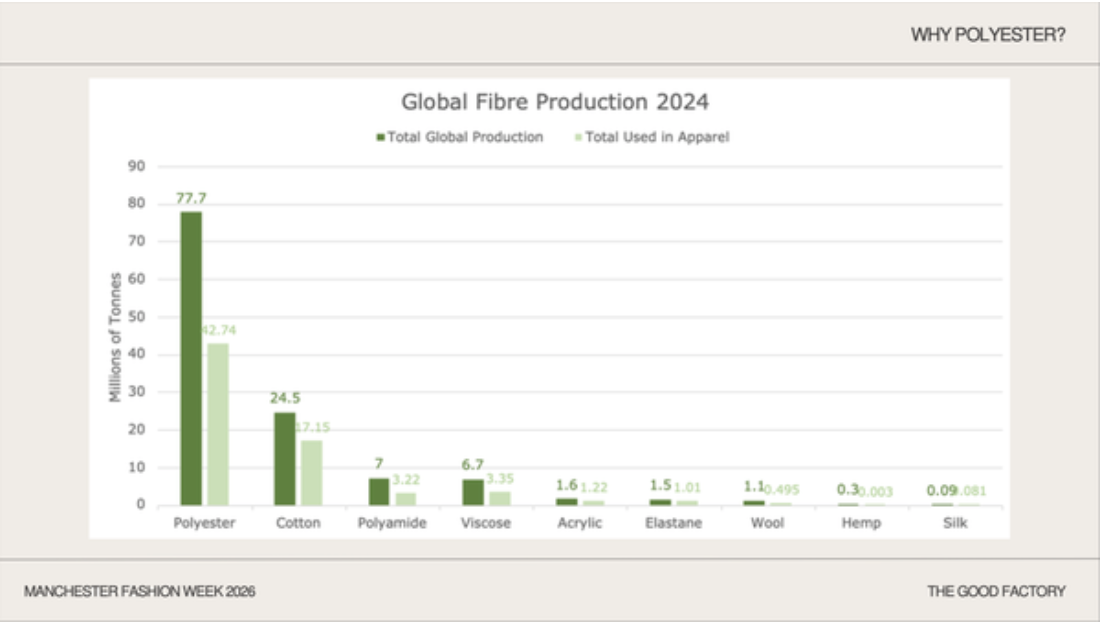
Graph compiles information from Textile Exchange 2025 Materials Report and from the Apparel Impact Institute.
Earlier this month I was invited to give a keynote at Manchester Fashion Week on polyester. If you were there, I'd hop off now. This is a repeat of that! If you weren't; welcome to the newsletter version of talk! Stick around because Erling Haaland's security guard was present, and he said he had to ring his friends in the evening to tell them to stop buying polyester. Which is hands down the best feedback I have ever had!
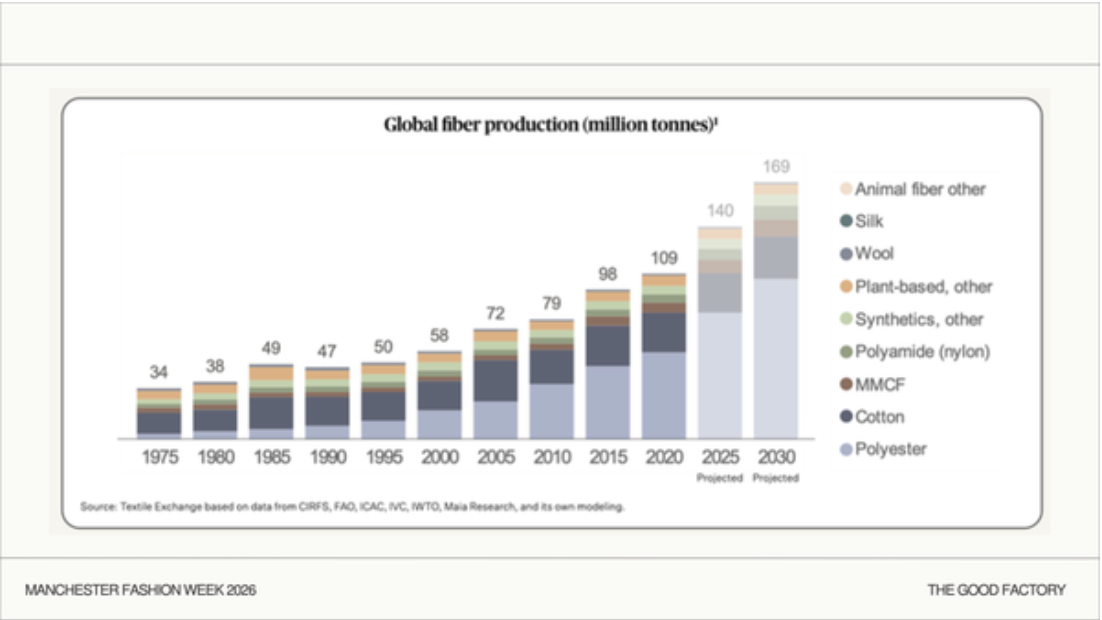
Image taken from Textile Exchange 2025 Materials Report.
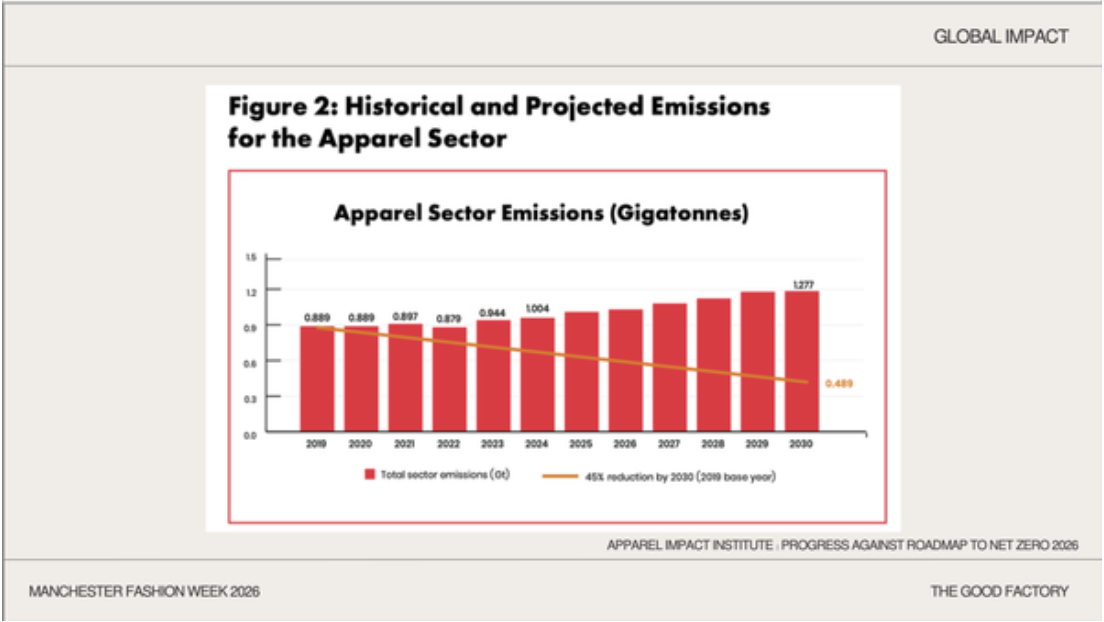
Image taken from Apparel Impact Institute Roadmap to Net Zero 2026.
According to Apparel Impact Institute; the average garment that contains polyester contains 51% polyester. And this is forecasted to rise, even before we added in a agriculturally impactful El Nino event. Why? Because we can manage how much we produce, at what price, a lot more effectively than a biomass product. Which relies on several factors humans can't control.
Our rising use of polyester is why we (the apparel industry) will not hit the 2030 targets to meet Net Zero by 2050. We are so far off track that we now need radical action.
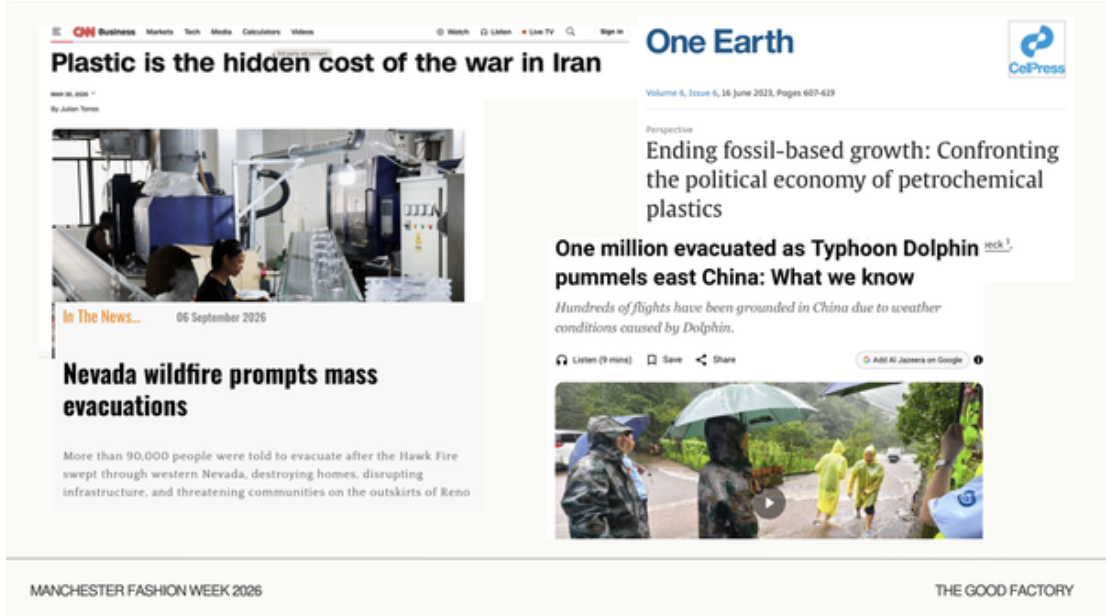
Series of news images discussing polyester’s impact on climate change.
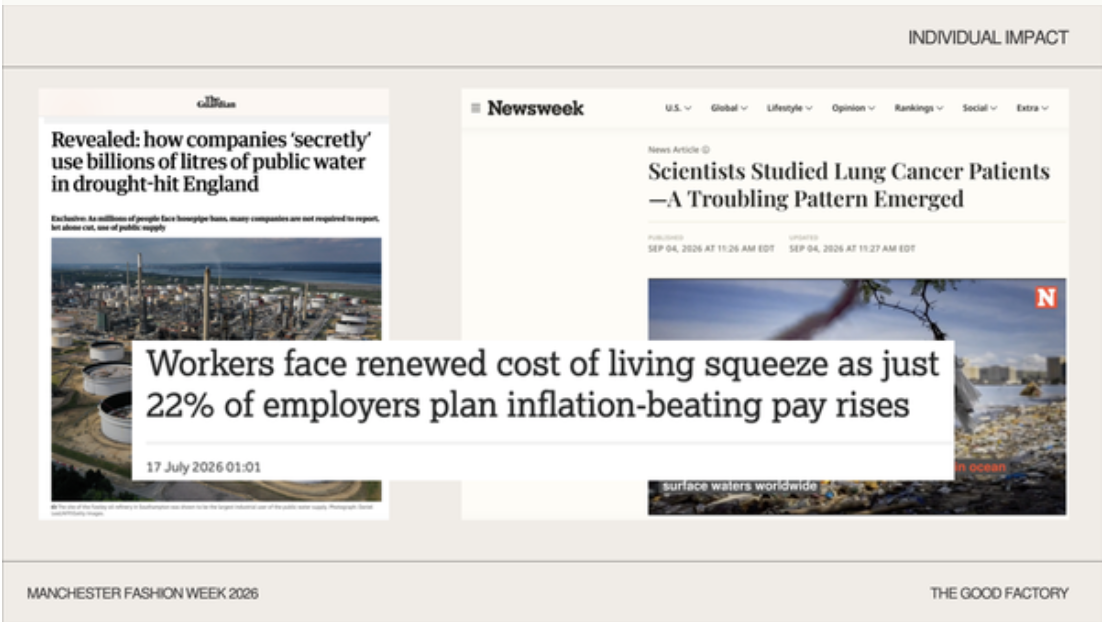
Series of news articles on the impacts facing the individual in 2026.
I have no doubt that any of you need me to go over the global impact of our fibre choice. But perhaps you aren't aware of some of the latest reports that demonstrate how our rising use of polyester is effecting us, as individuals.
Earlier this month scientists announced that there is a much higher percentage of microfibres in lung cancer patients that those without cancer. We already know ways in which chemicals in polyester damage our health, but what if it's as dangerous as smoking? In the UK smoking is banned inside due to the risks of second hand lung cancer.
In the UK we're expecting several areas to be in a drought status over winter. Which is practically unheard of. But did you know that Southampton's oil refinery is the largest user of public drinking water? You know, that stuff we need to stay alive and is in shrinking supply.
I have also seen over the last few years how career development is being impacted by the use of polyester in blends. How many people in a brand would know how to fix spirality in a knitted cotton now? How often will we see polyester added in to solve the problem quickly? I call elastane a lazy fibre. But maybe polyester is going to take its place. If you want a better job, you have to have experience.
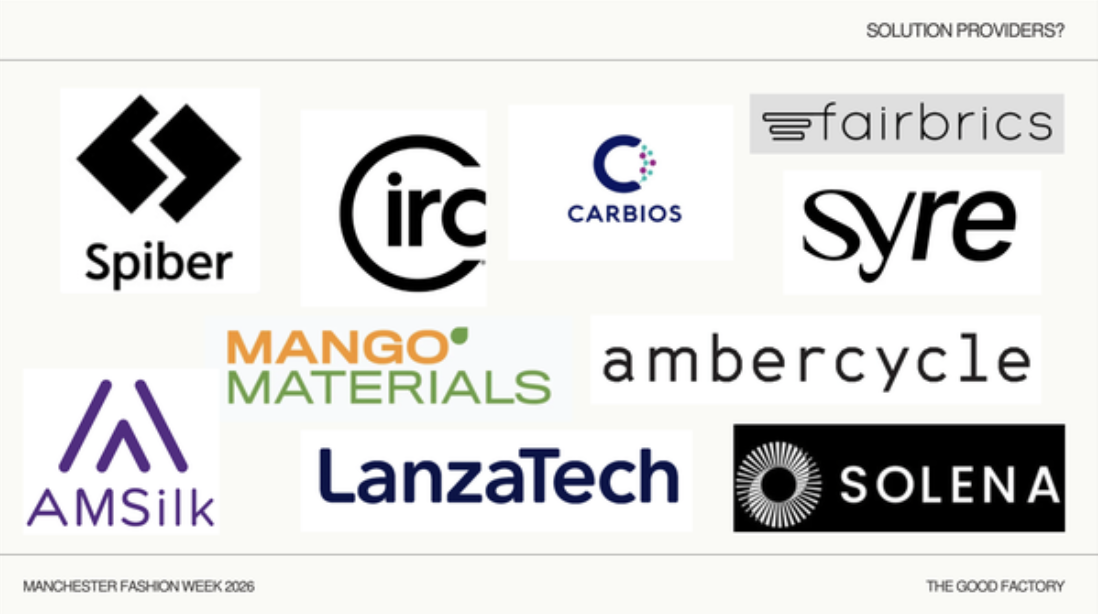
Small list of solution providers for more sustainable solutions.
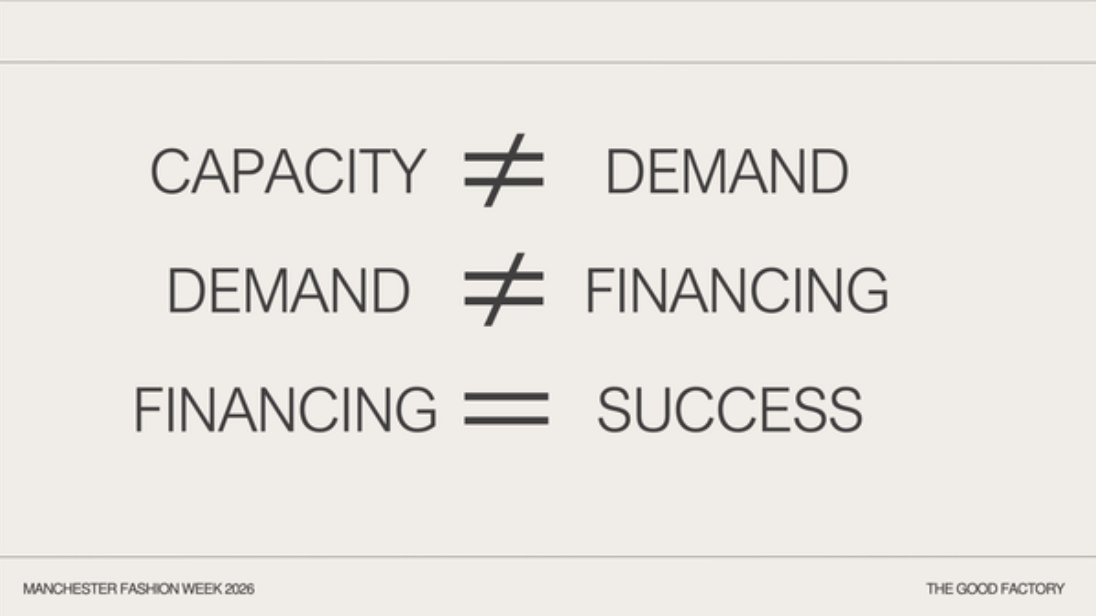
The problem with more sustainable solutions is scaling.
There are several solution providers which you may be familiar with. But the problem we have is none of them are producing at scale. The closest is LanzaTech, who produce 300,000 tonnes of ethanol from carbon capture, per year. Which does not come close to the 30 millon tonnes we would need to get back on track to achieve our Net Zero Roadmap goals. Which, incidentally, would have needed to be achieved last year.
Everyone else is still in the pilot stage with off take agreements. Which is not a too dissimilar position to SpaceX's Mars mission. And everyone is still saying that scaling up will bring price parity. But it won't. Which we'll cover shortly.
And the problem we have when we looked at recycled polyester; just because you can produce it, does not guarantee brands will buy it. Just because brands will buy it, does not mean it is appealing to investors. But appealing to investors is the only way any of these companies are going to scale.
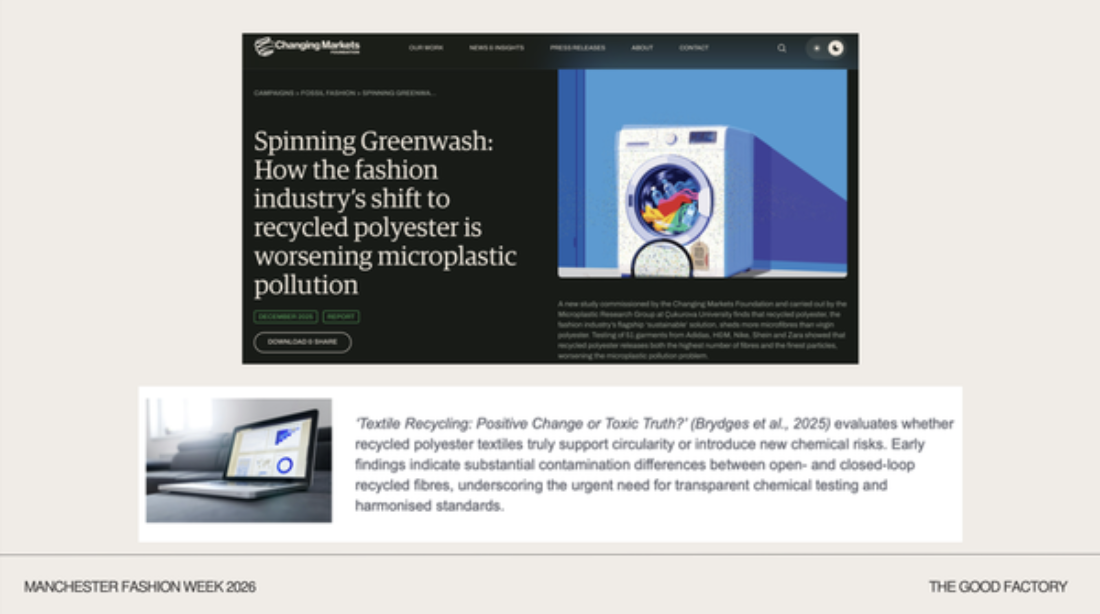
Some of the reported issues with recycled polyester.
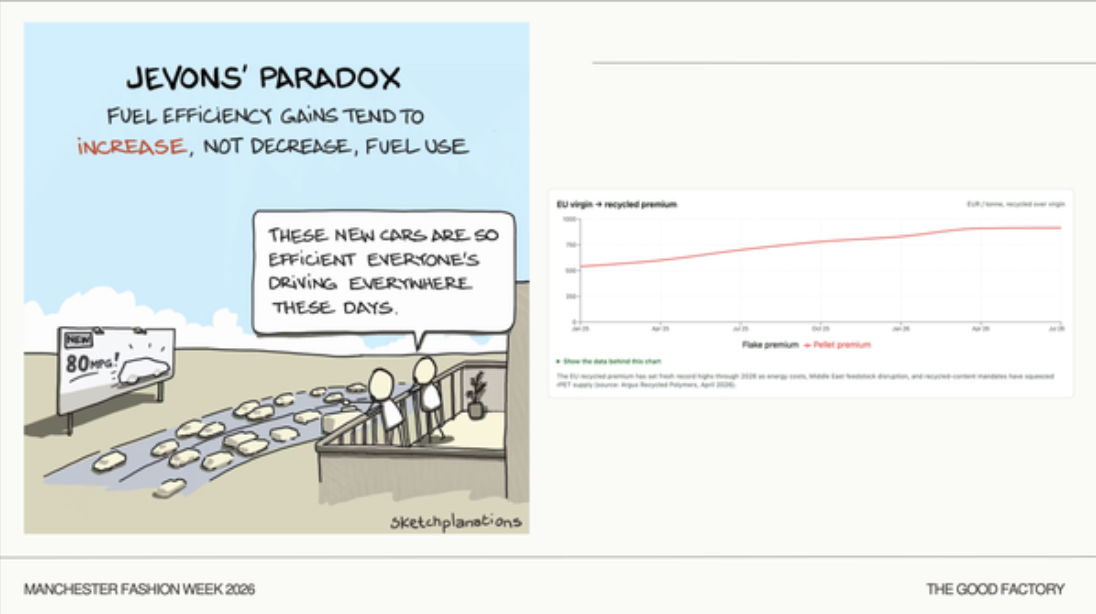
Unfortunately the growing capacity of recycled is not making a dent in the production volumes of virgin polyester.
In 2019 Textile Exchange reported that to achieve Net Zero targets, 45% of the polyester used needed to come from recycled sources. We currently sit between 12-14%, exactly the same as 2019. Why? That's Jevon's Paradox. Initially used to describe how the rise in renewable energy just makes people use more. So capacity may rise, but it never takes more of the pie. Or replace any of the stuff we are trying to replace. Polyester is no different.
There are challenges with recycled polyester. Textile Exchange came out with a new LCA study which demonstrates it is not a simple switch. There are still savings, but maybe not as much as the eco reporting platforms claim. Rathinamoorthy R. at the Vellore Institute of Technology in Chennai is a leader in microfibre research. And his team have proven that recycled polyester sheds more microfibres than virgin.
We also need to take into consideration that limits on contaminants are not a flat rate across the number of times something is recycled. It is compounded. The more something is recycled, the higher the allowed limits of harmful chemicals are.
The last graph on these slides is the upcharge of recycled polyester flakes compared to virgin in the last 12 months. The upcharge is increasing due to the rise in energy costs, but the baseline upcharge remains the same. Because that's how capitalism works. A marketing feature, in theory, can sell more, so therefore it's worth more.
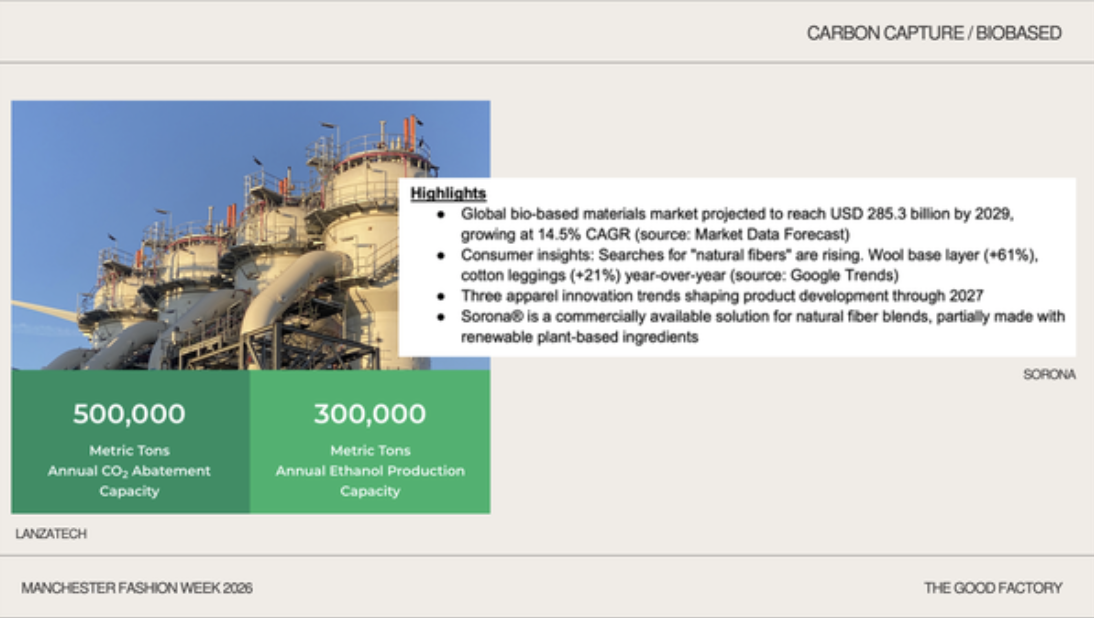
Carbon capture and biobased provide other alternatives.
Another viable replacement to virgin polyester is carbon capture or biobased. But, it's important to note that both of these only replace about a 3rd of the fossil derived chemicals used in polyester. LanaTech are interesting because they attach their plants next to high carbon emitting plants like steel production, to capture their released carbon to turn it into Ethanol. Which goes into multiple products. I find it a little confusing that when UK steel plants closed for renovation, they did not take up LanzaTech's carbon capture bid. Instead, they went with a company that will bury it.
If anyone knows why they did that. Please do let me know.
And while I do like Sorona polyester as an option. It's worth noting that the waste corn is also used to make preservatives and flavourings for food. So it's not quite the 'simple' message it claims.
Ultimately we have only a few options left to us that we can take now:
We need to remove synthetics from products that don't need it.
We need to switch all polyester to recycled / biobased / carbon capture.
We need to redevelop blended fabrics.
We must ensure that all monocomponent garments have a recycling route. (*That's on the producer, not the local government).
We must reduce cutting room floor waste. Recycling still creates waste. It's not a clean process.
We must build in product longevity.
And, we must only produce what we can sell at full price.