
Worried another bubble burst is coming? Here’s some actions to try.
It’s easy to feel overwhelmed of late with crisis after crisis hitting the headlines. Governments around the world having to deal with immediate fires that are pulling focus from long term issues such as climate change. As we band aid each new problem it can feel as if we’re using plasters over gaping wounds, helpless as we look on to the state of own local and global issues. Firstly I want to impress upon you that no one is ever powerless. And having seen first hand numerous other financial and apparel industry specific calamities, I want to assure you now that balance is always restored. Even if it looks different to what it was before. Which is why I wanted to come here to share with you some things I’ve learnt over the years in the hope it can help any of you struggling to weather this particular storm.
Rest and reassess.
This can feel like a luxury at such times, but I can promise you that when people are given time to reflect and rest, creative solutions to business problems are more likely to percolate. It is so tempting when things get tough, especially financially, to keep your foot on the gas or even try and increase productivity. It’s a lie that in times of financial uncertainty increased productivity will lead to increased financial security. I hope it goes without saying that as part of a reassess you need to be taking a long hard look at your financials, but rest before making any decisions, and ask yourself if these decisions make you feel excited. If they don’t, you’ll run out of energy before you see any financial rewards. Opportunities are bountiful even in the darkest of times.

Photo: Unsplash/Colin Watts
Shore up your supply chains with deeper relationships.
Another thing that should go without saying, with the current issues facing supply chains, not just in the apparel sector but across all industries, it is extremely tempting to start slinging the mud at the walls in the hope something sticks but moving your production around. If this is you, you are not alone, I know firsthand of some really big brands doing just that. Moving their products on a whim to gain a little bit of margin or a better delivery date. Two things I can guarantee you; you’re going to pay for it somewhere, and they’re not going to hit that delivery date, certainly not with impacting return rates. I think we all know the saying; if you want fast and cheap its not going to be good etc!
Understanding your suppliers pain points will help make businesses decisions that support your goals. Moving from a ‘just in time’ approach to a more consistent flow of goods, from raw materials to finished products, even for small businesses can generate a more stable revenue stream. This will also take a lot of guesswork out of merch planning, potentially reducing the need for sales periods. Periods of discount can be harmful to a business if it’s come to be expected by the customer, especially if you aren’t a brand used to purchasing directly for sale, which in itself is a disingenuous act unless its used to ensure the financial future of a business. Additionally, larger businesses use sale buys as a way to generate increased profit, discounting full priced items is no value to smaller businesses.
Better relationships with suppliers also has benefits for other services that aren’t directly tied to the financial accounts, which we often overlook but are still important. Data is becoming a huge part of economies within the global north and transfers of knowledge will mean you can adapt quicker. If you are on the look out for new suppliers, look for ones who have the ability to adapt quickly or have more to offer in terms of their supply chain. There are ways in which some can add value to your business by more than just producing products.
Fingers in multiple pies.
Did you know the average millionaire has more than one business? Which means you also need more than one offering or reach. Think about the likes of Rapha with their coffee shops, bike clubs and holidays on top of their product ranges! Needless to say they should all be financially healthy in it’s own dept, I have seen first hand with one part of the business funding another, it never ends well. Ever.
If you’re D2C perhaps its time to think about how a wholesale route can support your businesses plans. And as I mentioned in the previous section, sometimes it’s more than a financial transaction. The data your partners are able to provide can take a large amount of risk out of your buying decisions as well as pushing to you a new customer base. They’re also great for trying out new customer bases without having to spend on marketing. When deciding who to approach it isn’t just about what they can do for you, but also what can you do for them? Creating an agreement always has better business outcomes than simply negotiating a trade contract. Another thing I can tell you for a fact; things always come back round in surprising ways.
Do your pillars stand up to earthquakes.
So this may just relate to the UK at the moment, but fires aren’t just started on the balance sheet! It’s currently looking like we’re about to get a legislation overhaul without debate. While it’s unlikely (hopefully) that we’ll veer too far from the EU directive on this, after changes it last week we need to be able to plan for worst case scenarios. If you have a Tory MP I would start writing emails about this now, and regularly, as you’re more likely to get an inside scoop on what’s likely to come up. And they might drop something in conversation at one of their parties (!) that could benefit you, you just never know. Again, this advice does come from first hand experience.
If you don’t have business pillars, now is the time to get some. Pillars are different to foundations; foundations are the right market conditions and the skillset within your business to meet those market requirements alongside the financials to hit said conditions, also known as MVP (minimal viable product!). The pillars form additional supports when it comes to making business decisions and these can be informed by many things, but as I specialise in sustainability this is what I’m going to focus on. Every business should have 4 support pillars. If you’re a larger business you can have 6, but understand that 2 of those are most likely to be financial commitments as it’s very difficult to take 6 into consideration when making decisions. These should also be communicated throughout your business, so every time a decision is made with those pillars in mind (because realistically how often do people really asses business impact when making some decisions around travel, freight etc?). They can help determine future investment within the business by having other trackable data points outside of the sales report and profit and loss accounts. These pillars are also great to communicate to your customers as when they align, their emotions for the brand grows.
I personally really like the UN’s Sustainability Goals as guides to the pillars. Partly because some are so close in subject you can kill two birds with one stone so to speak (grim I know). And they can be quite narrow in their focus in order for you to drill down and make an actual impact outside of creating more stuff. If you’re writing your sustainability strategy then using the Sustainability Goals can help inform your targets or goals for maximum impact.
Positive adaptations.
The good news is I have actually taken my own advice over the last few months, which is why it could seem like The Good Factory fell off a cliff! We stepped back, assessed what we really want to bring to the world and what we can do with all the factors outside of our control and made some pretty bold decisions. In addition to continuing with our commitment to our Asian suppliers and ensuring an after life of each product we create, we have changed up our nearshore offering to limit supply chain shocks while bringing in new business offerings which includes strategy planning for sustainable sourcing and development, which falls in line with the EU directive around marketing claims (and the UK’s once we know what the powers that be are planning).
There will be even more content coming over the next few months across multiple channels as we work to help businesses shockproof their supply chains and shift towards a more sustainable future where they can create maximum impact and filter through the noise.
5 Ways to Make a Sustainable Impact in your Business Today.
I saw a brilliant post on Instagram a few days ago asking for nuanced perspectives into what brands could be considered sustainable and how do we bench mark it in the age of greenwashing. Ultimately it’s really difficult to be sustainable in fashion because we have a crumbling infrastructure that is designed to churn out more product cheaper. Sometimes it can feel like such a minefield you just don’t know where to start. So in the back of this post here are 5 things you can do today that will start you off into becoming a more sustainable product business. And if you still aren’t sure about starting these, please send me an email via the button top right.
1) Ensure you have copies of up to dates audits on all the factories you use. If they’re new to you its good to have the last 3 years (where possible, Covid did play havoc with manufacturers being able to be audited). Cross reference what they’ve improved upon and what they’ve let slip. If they don’t pay living wages yet (and many don’t), you can check how close they are to living wages through either the International Labour Organisations website, or the Clean Clothes Campaign. Understanding the percentage difference will help you build a financial plan to increase the amount you are paying them over a time period to match up to living wages. That plan could help them navigate price rises to the other brands that work with. You can use any preceding audits to ensure the price increases are going to the sewers.
Build a corrective action plan with reasonable timelines. Good CAP’s will have give a score for the level of severity the problem is, actions to be taken immediately; which is used for things like blocked fire escapes, ensuring fuse boxes are locked etc, getting the first aid kit fully stocked etc. Actions to be taken over the next month; which is for having a union representative voted in or engaging employees in other matters, replacing any equipment that may need to be ordered in, for example hand held metal detectors etc. Actions to be taken over the next 3 months; these are most often related to building regulations or any local regulations that need updating. And finally 12 month actions; this is for things like increasing wages to living wages. A good CAP will require evidence from the supplier and will work with them to ensure they’re hitting their goals. Having a strong financial plan and corrective action plan with your supplier helps build long term relationships.
2) Make sure you have visibility on your whole supply chain. And I promise it is not as hard as the larger brands make you think! It may also bring up opportunities to consolidate some of your items which will bring about its own financial rewards. If your supplier doesn’t seem keen to share then Non Disclosure and Buying Agreements will help alleviate any concerns they have that you could cut them out. When it comes to chemical suppliers for dyes and resin suppliers for polymers, there really isn’t that many around the world. And getting to know your supply chain can open up your brand to so many more developments and innovations.

Image: Unsplash
3) Have a plan for your fabrics (or components if you’re non apparel). There really is no reason to be using virgin polyester in this day and age. Polyamides and elastane are slightly trickier as there is a finite number available, compared to polyester anyway. The price difference on products is virtually negligible. And if that price increase does both you, spending time reviewing your patterns, lay plans and markers will most likely reduce your consumption to mitigate those costs.
Start building phase out options over the next 10 years to switch fabrics and trims to ones that are more sustainable. Can you start reducing how many multiple blends you use and opt for mono component garments? How can you offset your carbon? Where can you start reducing waste now and how do you build on that over the next 10 years? Review this every quarter like you would your financial plans.

Image: Unsplash
4) Reduce and change your packaging. There are so many great options out there are the moment, you just have to decide on your direction and start emailing! A lot of the work has already been done for you through FMG.
5) Invest money in something outside of increasing your business profits. Be that charitable causes, in interest free loans for your factories to update their infrastructure to reduce their environmental impact, or in innovations happening within the industry.
These 5 actions can be taken today and they will empower you, those in your organisation and your suppliers. The first step is always the hardest, so if you need that support to take it, you know how to reach me.
A peak into 2022…

Happy New Year, folks. If you celebrated the Christmas holidays I hope you enjoyed yourself and managed to switch off for at least some of it. I did and it was well needed. It also gave me a lot of time to reflect on the last year and the coming year, not just personally or professionally, but across clothing production and retail. Here’s a few thoughts I had based on some conversations over the Christmas period. It’s brief, sort of! And I’ll continue to delve into these topics, and expand on them, over the next few months. I do love hearing your perspective so do send us a message via the ask anything button.
Fabrics and Trims
Following on from my last posting; the future of synthetics, we’re going to be hearing more about fibre to fibre and chemical recycling. Waste is a huge, and immediate, problem so there is going to be increased investment in this sector. As well as it having a smaller environmental footprint than any other sustainable initiatives to date. I will continue to recommend using caution if considering using biodegradable synthetics. While it sort of addresses a problem realistically, due to the leaps we’ve made in F2F recycling in the last couple of years, this is not a sustainable initiative that will age well. Especially not in 5 - 10 years time. Consider the other options available to you, question how long you anticipate a garment’s lifespan to be, and start simple. It’s not a huge leap to think that in a few years we’ll be able to fully recycle a monopolymer garment. While we will continue to see innovation into new fibres, especially new cellulose for sports and health, ageing infrastructure is the biggest hurdles around scaling of new fibre developments. One of the reason’s Bolt Threads was not able to achieve a scalable roll out of their spider silk. Working smart with what we already have available that’s efficiently scalable does make more commercial, and environmental, sense.

Photo from Sweet Lassi by Priya Ahluwalia
Towards the end of the year, as we learn more about the chemical recycling options that are having lab success, conversations around consolidating dye recipes for continuity colours will become more prevalent. Being able to recycle a colour minimises the amount of “slurry” left over after the recycling process, and reduces water and energy consumption used in fabric dyeing processes. We already know that dope dyeing is the most efficient option, and recycling continuity colours at the same time as the fibres will reduce waste and environmental footprint. This will further the need for mono component garments to ensure dye recipes are consistent.
Expect to see more reports towards the end of 2022 and the beginning of 2023 around recycled non wovens. Especially in the carbon space. We’re seeing this a lot in aeronautics and recycling of wind turbine blades so it won’t be long, as those techniques are refined, until they enter the apparel space.
Manufacturing
It’s unlikely that we will see our supply chain woes disappear this year. In fact I would wager that they’ll get worse before they get better. Compounded by a shortage of raw materials, further Covid outbreaks and an energy shortage; lead times are increasing to estimates we haven’t seen in decades. Cash rich brands are shoring up their supply chain by placing purchase orders up to 2 years in advance and leveraging margins across their ranges to ensure stock availability. This will hit small and medium sized brands the hardest, who will struggle with similar delay problems they’ve faced in the last 12 months. Brands may even be faced with a margin versus availability conundrum. While there is temptation to offer bonuses for on time delivery this needs to be overseen with a healthy amount of scepticism, illegal overtime and non compliance outsourcing is likely to the conclusion. If we don’t see the manufacturing space stabilise by the middle of the year then I predict we’ll see the rise of single sewer households taking rise across Europe if the great resignation continues it’s trajectory. Brands that can adapt to continental distribution through warehousing and logistics will benefit most from this. This is also where we are likely to see the gap widen between smaller brands who can prove they pay the living wage versus larger brands who won’t be able to ensure wages through the supply chain.
Distribution and Trade Deals
The news that Liz Truss (UK Conservative MP) now holds 3 cabinet positions (apparently gone are the days when just being an MP was a full time job, never mind the extra of being a single cabinet minister) don’t expect any of these “oven ready” trade deals to be fully baked any time this year. The trade deal between the UK and Australia was heralded at the end of last year in the press, but when reviewing the overall value; I concluded it would probably cost more in my time reading it than the value it would bring to the UK apparel industry. Instead the deal has raised concerns voiced by the RSPCA around the mulesing of sheep, of which 70% of Australian farmers still perform. While most brands in the UK have checks in place to avoid this, margin losses are likely to make for some difficult conversations in the development process, especially where there are multiple savings. The UK International Trade minister will travel to India this month to begin trade agreement talks (delayed from Jan 2021). This is likely to be the most significant win for the apparel industry, so watch this space.

Photo from RawPixel
Do expect a difficult first quarter for importing and exporting goods. In fact I’d wager this quarter will be more problematic that this time last year with increased Covid infections, a continued shortage of HGV drivers and containers, and record high prices for fuel. In the UK we have a new paperwork system to contend with (yes, again.) and the world’s customs system has had it’s first update in 5 years with a streamlined effort to make HS codes simpler coming into effect 1st Jan 2022. Expect teething problems. A lot of them.
There will be improvements as we head into summer in the northern hemisphere, and we’ll see a further drive to eliminate paper instructions and moving to QR codes. Which is not only good for the environment, it will improve ordering efficiency and reduce delays.
Sales Channels
Convenience still reigns as king for the consumer so expect to see sales split even further across multiple channels. A brand to watch here is probably Nike. They’ve made a number of moves over the last 5 years to consolidate margins into their own business and remove 3rd party retailers. How their sales channels are likely to expand will give an inkling into how the next few years plays out. They have the budget, and the team, to assess every sale (to businesses and governments data is king), but they’re a big ship so where they put their money is an indicator of good returns.
The sales channel is the place to embrace technology for 2022. While there is a lot of chatter around technology revolutionising the supply chain, and it will, there is ageing infrastructure to contend with first. Digitalised products rather than physically shot samples will reduce lead times and business costs without impacting sales.
A final note…
While sustainability will continue to be at the forefront of conversations happening in nearly every sector we are likely to see shifts in the language being used, especially in marketing. Sustainability is a big topic and as consumers become savvy in decoding marketing messages that fail to align to a brand’s intent versus impact, a brand’s message will need to adapt to that. One off projects or products; like Adidas Bolt Threads tennis dress, or Napapijri Circular Series jacket, will become a concept of the past towards the end of the year as consumer focus on whole business / range impact.
Wishing you all a prosperous 2022!
The Future of Synthetics
Coming off the back of Performance Days Munich last week I wanted to write down my thoughts around the future of synthetics which dominated many of the discussions and talks that were had. The future and feedstocks of polyamide were well discussed in many talks from supplier to brand to industry expert. And while I agreed with much that was said, there did seem to be an unspoken underlying factor as to some of the conclusions that were drawn. That made me feel somewhat uneasy. Which is something I wanted to address here, in this space. And as you’re here, I thought I’d give a run down of some of the other synthetics as well! It goes without saying by now; there is no perfect solution, only ones that are slightly better. But by pushing for those ‘better’ options, we open up the possibility for continual improvements. Because funding will always go where the money is. Voting with our buying budgets will have the biggest impact on the sustainable fabric space. For the purposes of this article, I won’t be reviewing the virgin aspect of these fibres. I’ll only be looking at recycled or non petroleum feedstocks.
So lets start with rummaging around the world of polyester. It is the most popular fibre by far due to its strength, quick drying, malleability and its cheapness. Polyester, like polyamide, is a fibre made of polymers invented by DuPont during the Second World War. If you want to know the differences between the two fibres, there’s a good chart here. Now we’ve all seen the ‘this t’shirt has saved 9 bottles from going to landfill’ marketing. And who doesn't love to save something from landfill for a new lease of life. But how, at the end of 2021, are we still sending plastic bottles to landfill? There is a well established recycling chain for plastic bottles to, you guessed it, to be made back into plastic bottles. Why do we feel the need to remove a plastic bottle from a closed loop system to make it into something new? It’s worth mentioning now that each time we recycle a polymer chain, the chain gets weaker. Which means it’s not possible to recycle indefinitely without needing new polymers added in to strengthen the chain. Now we have a lot of waste, so surely there is no harm? This is where, in order to be sustainable, we need to review who is benefitting in this supply chain and whose waste problem are we solving. A list of the largest plastic polluters can be found here. These are the same organisations that pledged $5 million to Kenya’s plastic collectors (who were being paid less than minimum wage by the resin suppliers who make the rPET chips) in 2019, and yet a single dollar has not been given to those on the ground. A way round this problem has been a number of branded yarn suppliers, giving brands complete traceability on where the waste comes from. And there are some really impactful ones, but equally there are ones who use a team of volunteers in poorer nations instead of paying people from those communities. So before you get sucked into the idea of anything, it’s always worth reviewing, who benefits.
So now we get the recyclable bit. It is currently not possible to recycle polyester fibres into new polyester fibres at scale. At all. The RiSE institute in Sweden, along with other facilities like it, have managed to create a recycled polyester yarn. A number of their sustainability projects are summarised on their website. But this is only in lab form, and there is currently no way to dispose of the ‘slurry’ (extracted dyes, finishes and other fibre blends) that is left behind. Although some researchers at universities are looking at resolving that problem, which is many years from being able to implement at scale. Polymer recycling is big business, and the resilience of the polyester makes it easier to extract from other yarns and make into a new product. Currently the only chemical recycling facility in the UK is only able to produce LPG gas from polyester. While this will hopefully change in the next 2 years, providing a better product offering for polyester waste. This is where we are now, and where we have to plan for without scalable alternatives.
Moving onto polyamide, which was the yarn of choice in many of the discussions at Performance Days Munich. Unlike polyester, there is a limited amount of sources for recycled polyamide, which makes it more expensive than polyester as well as not being as quick drying and having less stable colour adherence. And just like polyester, there is no fibre to fibre recycling available. Which is compounded in the complexity of its manufacturing process which makes it more difficult to strip out from other additions, mainly elastane. The benefit of this particular chain of polymers, is that it doesn’t weaken in the same way as polyester, so once we have got to grips with recycling, virgin additions will not be required to strengthen the chain. So what options do we have for polyamide, otherwise known as nylon;
the most widely available is described as recycled from post industrial waste, such as fishing nets for example. This is a really good option, especially if the resin supplier is buying the feedstock. In Europe it can cost as much as €150 to dispose of a fishing net through proper channels. Which given the slim margins that industry make, its no wonder so many nets get ‘lost’ at sea. Making waste part of a revenue stream is only a good thing to ensure proper disposal.
Fulgar presented their new polyamide yarn from a new feedstock, tyres. Which will be ready for purchase early 2022. Tyres have been banned from landfill here in the UK since 2002 and we have moved to an almost 100% recycling of tyre waste as part of the government’s commitment to a zero waste economy. What makes tyres so attractive as a feedstock is that they can be recycled through a similar process to rPET with the tyres stripped out into individual components; rubber, oil, steel and carbon. It’s the recycled oil that is used for the creation of the polyamide fibre. This reduces the carbon footprint of the yarn compared to virgin, and it’s a cheaper recycling method compared to fishing nets.
partial or fully bio based polyamide which is generated from castor bean oil.
other investigations are on going to create polyamide from other sources such as food waste, following on from the creation of new fabrics using waste from bananas and pineapples. Whether these would create a suitable PA remains to be seen as its still a new area of research.
It was the expert talks around the last 2 feedstocks that made me a little uncomfortable. The conclusion drawn by European experts was that food waste as a feedstock was preferable to feedstocks from castor bean because it’s a farmed product. And there may be many instances in which that could be right for your brand. But we need to be mindful as to whether those opinions come from a place of privilege in that it was a northern European opinion where farming and food scarcity is much less of an issue than in places where castor beans are grown. To fully understand the impact of climate change on farming I highly recommend this Headway podcast which talks about climate change’s impact on coffee farming. Castor beans are easy to farm, they’re like weeds that don’t strangle other plants, and they require little maintenance. They do well in climates that have been impacted by climate change and can be a great addition to a farmer’s income. The point at which it is more profitable to farm castor beans than food, then our system has failed. My concern around food waste as a PA source stems from the question, who will benefit? Because the probability that it will be general population or local governments is unlikely. Collection of waste for such sources would be required at industrial level. So those that will benefit with waste food sources being part of their revenue stream, are most likely those same brands listed as the biggest plastic polluters.
We don’t have any perfect options, but we have better options. By knowing your brand’s core values, using a range of fibre types in moderation (although not blended together because that would be a recycling nightmare) and always asking ‘who benefits’ we can start becoming more sustainable. If you have any thoughts on this post I would love to hear them, so please drop me a message on the button above.
Biodegradable Synthetics
Last week I had a message from a friend asking for my thoughts on biodegradable fabrics. You’d be forgiven for thinking they are the next big thing if you’ve attended a fabric trade show in the last couple of months. Even though my eyes are always on Performance Days or Ispo for the main themes of the next few years. Which I suppose makes the first question: is it sustainable? And off the back of reports last week that recycled polyester fraud is now widespread in our supply chains; can we be sure it does what we’re promised?
Firstly, what does biodegradable fabric mean? I don’t know the ins and outs so I am going to refer to my colleague Dr Ashley Holding at Circuvate. “These are conventional synthetic fibres which have an additive added that speeds up anaerobic degradation in landfill conditions”. Anaerobic degradation is the process where bacteria breaks down matter into biogas and water. However, tests have shown that most do not fully degrade and some plastic residue is left. From a physics perspective, you never really fully get to zero. If you follow me on Instagram I use a lot of images of Albert Einstein ballroom dancing to illustrate this point! Dr Holding also points out that these resins “facilitates the release of non-biogenic carbon in the atmosphere, which under anaerobic conditions is mostly methane, a potent greenhouse gas”. Don’t worry, I had to google all that too. And if you’ve been paying attention to COP26 you’ll know that the EU and US have made a pledge to slash methane emissions by 2030. Although how the UK government plan on doing that we haven’t seen actual details. This is relevant and the 3 largest emitters are agriculture, landfill and oil / gas extraction.

Image Unsplash Antoine Giret
In real world terms though it does potentially have a place. As we ramp up recycling efforts there will be instances where health and safety laws mean that there will be instances where we can’t process used textiles. And that gap will need to be filled by compostable and biodegradable fabrics and fibres. Most notably is underwear and uniforms from a healthcare setting which can’t be processed in the same way as a pair of jeans. We also aren’t seeing encouraging results on a more sustainable elastane. Could biodegradable elastane be the temporary solution when recycled is not available? Dr Holding also notes that making biodegradability claims is tricky, especially in countries like the US. Something that’s likely to gain traction within the EU as marketing claims come under increased scrutiny for greenwashing. You’ll be forgiven for having missed the French advertising body finding Adidas guilty of greenwashing. It wasn’t picked up by mainstream press but you can find it here.
When it comes to being presented with a biodegradable fabric at a fair what do we need to look out for? Don’t be dazzled by brand names, effectively they all draw bacteria to it, it’s how they increase the degradation time. What timeline are they giving you and under what tests has that been performed? Resins will degrade differently depending on fabric. Mesh will degrade faster than a 2x1 220gsm twill for example. Have they tested that on any dyes or finishes? Are they recommending a particular dye and have that been verified through labs such as TUV? In sportswear antibacterial finishes are one of the most commonly used, how will that effect the degradation period? Will your customers forgo anti bac finishes for biodegradable? And, finally, what is left at the end? When it comes to fibre to fibre recycling we often refer to the left over chemicals which are made up of dyes and finishes as slurry. How we manage slurry is a post for another time. My point is that nothing truly disappears.
Once you have those answers, how do you decide if it should be part of your product offering? What message is being given to the consumer if you’re saying ‘once you’ve finished with it, put it in landfill’. Given the global effort to increase recycling rates it does seem a little counter intuitive to give the impression that landfill is an acceptable way to dispose of a garment. And in terms of carbon footprint, using recycled resins reduces CO2 emissions by 70% compared to making virgin polyester chips. When you add in emissions from degradation it can be more harmful to the environment to use biodegradable than recycled and recyclable. And brands do need to be part of the solution in terms of garment take back when it comes to encouraging recycling.
All in there are times and places for all the sustainable options coming to market that are able to balance the environmental and economical requirements with the consumer use. To achieve the best results range and product lifecycle strategies are going to need to be incorporated at the same time as the merchandising range plans for a season. If you want to see how product lifecycle strategies can improve the sourcing and development of your products then drop us a message. If nothing else, stay cynical!
Living Wages Only Cost 1%? Not That Cut and Sewn.
There are loads of facts and figures that do the rounds in clothing. How far those stats travel largely depends on the media outlets that pick them up. Forbes, Vox and The Cut picked up this juicy nugget in 2018 and there has been a number of influential articles written since, including by the increasingly popular platform for measuring a brand’s ethical impact; Good On You. Now if you’re not familiar with this stat already, this figure was derived from a couple of studies. One by the International Labour Organisation in 2014. And verified through The Clean Clothes Campaign, who try to demystify the complexity of a garment’s cost structure. Although, as someone who has been employed for many years in a role that is responsible for garment costings, it is a rather oversimplification. Generally great for communicating to consumers with a disposable income. It’s not helpful for those in industry, or those without a disposable income. Largely because of how complex it is in the first place, but they do a great a job where they can.
The report released in 2014 by the ILO is the most comprehensible study of wage calculations ever produced. There were 5 manufacturers involved through 4 sports brands which covers clothing and sports shoes. The result is a comprehensible list of actions a buyer or product developer can take to reduce garment costs without impacting living wages. I myself have used these techniques since I read it in 2015, and honestly, it’s game changing. However, there does need to be a level of trust between brand and supplier which can take a while to build up. And in the early stages those negotiations on product costings can go on for hours. Once that time has been invested and a relationship built up, it is mutually beneficial when you have visibility on each others monetary needs.
The problem arises when stats like the one above are filtered through click bait headlines without considering the what is missing from the report. The largest one is duty. And I can see why, working out duty is complicated and about as exciting as watching the roof being closed on centre court at Wimbledon. No one turns up for that alone. The ILO report was based on production in Cambodia and Vietnam, both of which are duty free countries into the UK. But duty is not calculated based on the country the garment was sewn in. It is based on where 65% of the garments components are produced (this is based on UK duty regulations and does vary depending on country and the type of trade agreements made. If you’re in the UK you’ll know how much the government like to talk about trade agreements in terms of food. I don’t believe I was the only person shaking their head watching Liz Truss get very excited about trading British cheese for Japanese soy sauce). Duty on clothing is between 8-20% of it’s total cost depending on the material, but the average for fabric produced in China is 12%. This is on top of the import costs for the fabric in the first place. So you’ll pay 12% of the fabric cost to get the fabric into the country it’s being produced in, then 12% of the garment cost to import it into the UK. Vietnam and Cambodia are not big fabric producers, and even less so at the time of the report. Meaning fabric was most likely coming from China, Taiwan or Thailand.

Image from Clean Clothes Campaign
Another notable factor in the ILO study, that wasn’t reported in the mainstream, is that Vietnam and Cambodia are high volume production countries. On average the MOQ for sewing facility there is between 3,000 and 5,000 pieces. The more pieces you make, the more efficient the line in economical factors. Factories establish a garment cost by working out the sewing minutes, and changing lines over factors into that cost. The more you have to change the line for styles or colours, the more the sewing minutes increase, and therefore your cost per garment. The brands participating in the study; giving the ILO access to their designs, development, production and pricing hierarchy, were some of the largest sports brands in the world. One brand alone can often use as much as 100% of a factory’s capacity. The more products they make with a factory, the more competitive their prices. It literally pays to produce more. Just like plastic bottle companies who send their products straight to the recycler in what is defined as pre consumer waste, it’s cheaper to keep the lines running than starting and stopping them. Meaning the product costs for these brands were already at the lowest for the apparel category.
When it comes to assessing wages in a factory, in order to make it simple they need to asses the average wage on a line and whether the average achieves living wages. Given that many sewers start life as apprentices it does make sense to start them on minimum wage while the employer spends the money training them up. Sewers are ranked in grades from A for the most skilled sewers who can perform all tasks on the line, to D who are the apprentices and generally perform only one simple task. The make up of the line will determine the average; if you have more A sewers the average wage will rise and the gap between average wage and living wage will be smaller than a line with a higher number of D sewers. In terms of line efficiency, if a style is complicated it is preferable to have a higher number of A sewers who can produce more in a shorter time frame. Each factory has it’s own way of managing sewing lines depending on the type of product they usually produce. If you’re a factory specialising in casual t’shirts, your need for A grade sewers is lower and therefore the average sewers pay is lower than those in factories who specialise in technically complex garments.
So to conclude, the percentage retail cost given in the media is rather misleading. It’s just not that easy. We can hope that at the very least headlines like this will make brands look at the cost they are paying for an item. If it costs less than a cup of coffee as an FOB price then you can bet living wages aren’t being paid. But we need to open up the conversation across the whole apparel industry, to be collaborative and transparent in order to make this industry ethical. Hiding behind Anti Competition laws like H&M just won’t cut it anymore.
Is Radical Transparency Actually Radical?
Radical transparency is a term I’ve seen becoming more frequently used in brand marketing communications. But how radical is it? In 2019, a report indicated that only 85% of brands could trace their supply chains back to their garment producers. With 15% able to trace their supply chains to fabric mills, and only 1% further than that. Traditionally there are 5 tiers to the manufacturing system, 1 - garment producers, 2 - fabric producers and trim suppliers, 3 -yarn producers, 4 - fibre producers, 5 - feedstock producers. Yet this system doesn’t take into account the off shoots from each stage, such as dye houses, chemical suppliers etc. And rarely is the production of trims covered. One of the reasons YKK is so popular, and produces 50% of the world’s zips, is that they produce each component. They make the nylon yarn for the tape, the plastic resins for the teeth, even the cardboard for the packaging. Which makes it one of the only truly transparent companies in the world. It also ensures that all their products are made to the same standard. However that comes with a upcharge, one that many brands are happy with if they feel their customers perceive YKK as value for money. In the continual race to the bottom we’ve seen companies such as SBS take some of their market share. While SBS import all trim components, they are able to compete on price.
Of course I have my own experience with brands traceability claims. One of the ways I verify who manufacturers say they produce for, is to check import and export records. In one instance I was able to verify that a particular manufacturer did in fact produce for a well known sportswear brand. Sending several containers a month to the US. Despite the brand’s website saying they are committed to radical transparency by publishing their core list of suppliers, I couldn’t find a mention of this manufacturer there. Quick dig through the import and export records for this brand and I had established that the manufacturer was producing as much as 40% of the brand’s imported apparel, but this brand wasn’t going to be transparent about them. Needless to say I was intrigued, so the next step was to assess their audit report. Was there a reason for them being omitted from the list? While they weren’t a bad supplier, and did not have any unlawful practices, they did receive a pretty poor rating for the amount of overtime seen in the audited time period. And 60% of their workforce were migrants on temporary contracts. Again, while not illegal, we only need to look to some industries in the UK and their use of zero hours contracts to know that exploitation is rife and those on temporary contracts are often not able to refuse overtime. In garment producing countries the International Labour Organisation has found a direct link between the amount of overtime a caregiver does and the amount of time their children spend in education settings. With 85% of the world’s sewers being women, the more overtime they do, the less their children interact with formal education. In the same report the ILO also noted that as many as 45% of those sewers don’t make minimum wage, furthering the need for overtime. While reducing the access to education for their children, furthering the circle of poverty. To date, the manufacturer is still producing for this brand, and the brand still doesn’t have them listed. Yet the Fashion Transparency Index had them ranked as the 7th most transparent brand out of 200 they’ve vetted. Radical, right?

Image from Rawpixel
On the flip side we’ve seen a rise in brands trying to make their own voices heard. To communicate radical transparency in their own way. Which makes sense, as according to the sustainability consultancy Futerra; 79% of Gen Z think brands aren’t being honest about their environmental claims. That rises to 84% for working conditions in their supply chains. So you end up with great statements like Ace and Tate who wrote a blog post entitled Look, we f*cked up. And, to be fair to them, I can see why they made some of the decisions they did. Why they thought bamboo was sustainable. Why they thought they could reach net zero by 2030. They weren’t being negligent, they just didn’t understand. And they didn’t understand because each step has become a commercialised product. But the outcome has been some steps that they can implement to make the changes they want to see. There is no perfect switch we can make in terms of sustainability. Even Lyocell, the sustainable alternative to viscose, isn’t perfect. The chemicals used in the production is less toxic than standard viscose, but still toxic none the less. Thankfully with Lyocell being a branded product of Lenzing we know that the chemicals are disposed of carefully. Which is not always the case with viscose manufacturing across Asia. Especially when 99% of brands can’t trace their supply chain back that far.
But how honest are some of these companies who embrace a flawed image in the name of transparency. The idea, after all, is to build trust. So how much should we trust them? Ultimately, the larger the brand the larger their impact on the environment and their supply chain. Could we accept the sort of apology Ace and Tate produced by brands in the wake of Rana Plaza? While the Rana Plaza collapse made headlines for the severity of the catastrophe. There are plenty of instances every year of smaller scale disasters. I can remember an instance of being evacuated from a factory as a fight broke out in the packing room, resulting in the warehouse manager having a metal stake impaled in his head. Personally, the jury is out on the actual transparency here. Especially for larger brands who have a considerable workforce with the sole job to sell more products. I have come to that conclusion because I know first hand how hard sourcing is. And how it takes effort from multiple stakeholders in order to make the kind of impact we expect. But the more money a brand makes, the more they should be doing. The sportswear brand I mentioned above turned over 1.6 billion euros in the 2nd quarter of this year. I wonder how much of that went towards diversion tactics over transparency? Oooh, quick look, pigeon.

Dead Stock - A Dead End Solution?
In a perfect world dead stock would not be a thing. How we manage to continue to increase the amount of fabric and trims we make and still end up with deadstock baffles me. In the wonderful age of social media we have the capabilities to collect data from consumers and draw conclusions about their buying habits to a highly accurate degree. However, we still rely on historical data, plus a bit of wishful thinking in terms of growth percentages, to make our buying decisions. Add in the race to the bottom on price, which often means businesses over buy in order to reduce surcharges and spread the load over sales periods, means that we have an increasing amount of dead stock, or product that will never be sold.
Now not all dead stock is bad, in some instances it does serve a purpose. Small brands are able to keep their cashflow lean, students have access to a wide range of fabrics that increase their education around how fabrics react in 3D form and the best manufacturing techniques. Remnant sellers are able to make a living selling to hobbyists and crafts people, generating income for people who may otherwise not have some. Clothes made from good quality dead stock can often out live what it was designed for before it became dead stock. But ultimately using dead stock can’t be considered a sustainable alternative.
One of the first instances of a UK brand utilising dead stock to create a name for themselves was a company called Shite Shirts, quick look on Google and they do still exist! And despite only using dead stock fabric and trims since their inception in 2003, they have never marketed themselves as sustainable. Yet today a brand only needs to be using dead stock fabric to be listed in one of the many “10 most sustainable…” articles. Another new dead stock trend that’s appeared in the last couple of years is brands taking dead stock apparel and making them into something new. Now I’m all for buying product from a manufacturer where the buyer hasn’t been able to complete their order and reselling it either in the form that it was made, or updating that with a graphic or a print. You aren’t generating anything new, you’re not increasing the amount of waste and you are supporting a business in, most likely, a country with cheaper labour who isn’t able to access support when buyers either cancel the orders or go into administration.

www.shiteshirts.com
The big problem arises when a brand buys dead stock products and then turns them into something completely new and charges a premium for being sustainable. For example, there is a lingerie brand that buys dead stock t’shirts from a manufacturer and makes them into pants and crop tops through another sampling house (they use a sampling house because their dead stock is sourced in Bangladesh and the minimums there are high). These aren’t recycled products, these are new garments that have never seen an end consumer. Typically a standard t’shirt wastes about 15% of fabric when it’s cut, when you then cut that garment up again to make something new, it creates even more waste. At best it’s doubling the waste, due to something already being cut and sewn you’re limited with how much you can get out of it. Additional waste won’t be taken into consideration either, such as sewing threads and care labels etc, of which they probably won’t know the composition of and therefore will be relegated to the rubbish bin. Even if they claim they are recycling this waste; there is currently no fibre to fibre recycling anywhere in the world (this is terms of keeping the quality the same, there are options for recycling some fibres by turning them into mulch and re-spinning, however the quality isn’t achieved for apparel during this process as yet). Either way the waste is high.
The next problem it brings up is around supply chain transparency. The brand is completely absolved of any illegal labour practices around the manufacture of the dead stock. This in turn increases the likelyhood that supply chain violations will remain unchallenged. If other brands won’t work with a supplier because they violate these laws then it can be cheaper to continue making “dead stock” for other brands to take to “recycle” them, especially if the demand grows. Now I know you must be thinking; ‘what a cynical person!’, and as I’m British I’d say you were quite right! However, we are seeing this exact instance for recycled polyesters. It is an open secret that its sometimes more profitable to keep a plastic bottle company running all year round and selling what they can’t sell to resin / yarn suppliers to turn into recycled polyesters than it is to only make the amount that’s been ordered (this is also known as pre consumer waste). Using dead stocks absolves a brand from having a fully transparent supply chain. In the same way that we only track carbon emissions on the initial product and not any subsequent products. So a recycled polyester will have a lower carbon footprint because they don’t take into account the carbon footprint of the plastic bottle it was in a previous life. Not a problem if it’s been used in the way it’s intended, but when it’s pre consumer then we should be made aware of it’s environmental impact and it shouldn’t absolve brands from not having complete transparency from the initial fibre creation stage.
There will always be instances where dead stock will make a benefit somewhere, but if a brand calls itself sustainable because they use dead stock, it’s time to think critically. Are they solving a problem, or are they profiting off it?
Recycled synthetics are not the answer to our problems.
I see a lot of conversations around recycled polyesters and polyamides (Nylon), the marketing messaging from (mainly) fashion brands is that a switch from virgin to recycled is good for the environment. But, as with everything, it’s not as cut and dry as those marketers would have us believe when it comes to sustainable fabric choices.
There are 4 types of fabric that are derived from oil; polyester, polyamide, elastane and acrylic. The first 3 are the main fibres used in sportswear; both polyester and polyamide come in virgin and recycled content, elastane currently is neither recycled or recyclable, although there are some partial bio based options from Lycra and Dupont. Acrylic is mainly used in fast fashion and is big in knitwear because of it’s handfeel and fine wool-like appearance. Acrylic is neither recycled or recyclable and due to it’s natural properties doesn’t last as long as the other fibres, it pills quickly and sheds longer microfibres during washing, which gives the garment a shorter lifespan. Meaning that it is very often not good enough quality to resell so it ends up in landfill, taking decades to degrade, or incinerated.

Oil facility. Photo by Josh Redd.
The most popular recycled synthetic is, without a doubt, polyester. While some of this can be attributed to the increased volume being sold, it also has a growing feedstock in the amount of plastic waste we create. The first thing to note is that there are 3 categories of feedstocks for recycled polyesters; post industrial, pre consumer and post consumer. Post industrial is the largest recycled feedstocks for polyamide as this makes up things like discarded fishing nets and the like. This can be beneficial as due to the nature of these polymers they can be recycled multiple times and they can’t be recreated into other plastics so clothing fibres is a good option for recycling this waste. The down side is that there is only a finite amount of polyamide in the world, so as the demand goes up the price fluctuates more than polyesters. You won’t see many products marketed as post industrial recycled polyester, whether that means they don’t use post industrial plastics is unknown, rather it’s generally agreed that post industrial only works in marketing form when it relates to ocean waste such as fishing nets.
Pre consumer waste is a rather questionable source; why would you be recycling something before the consumer has even used it? There are many stories that have done the rounds over the last few years of excess plastic bottles from packaging suppliers being sent directly to fibre recycling facilities to be made into recycled fabrics rather than being used. How accurate those stories are, I couldn’t tell you. But I do know that sometimes, when it comes to cheap, silicon sportswear accessories, it’s often cheaper to make the minimum order quantities than it is to make the smaller amount you want, the excess is often then incinerated. So while I couldn’t say for definite that plastic bottles go straight from producer to recycler, I can well believe it.

Photo by Nariman Mesharrafa
Which leaves you thinking that post consumer waste must be the better option, right? Well this is where it gets a bit murky. Firstly, the largest producers of plastic waste are Coca Cola, Pepsi, Nestle and Kelloggs. These companies have made countless pledges to deal with the amount of waste and virgin plastic they create. To date, not a single one of their pledges has been met. More needs to be done to hold these companies accountable, and dealing with their waste for them is simply not going to do that. Where justification could be argued for is if these companies met their targets for financial aid to countries that deal with this plastic waste, sorting and collecting it to be sent to recyclers. The US sent more than a billion tonnes of rubbish to Africa in 2020 and yet plastic collectors in Kenya earn less than $0.05 per tonne. If both waste producers and recyclers paid enough to lift people out of poverty then this could be considered more sustainable than it currently is. It is worth mentioning that there are some community based collectors that pay incentives for people to donate their plastic waste, but these are few and far between. Secondly, in it’s clear form plastic PET can be recycled up to 9 times to be made into new packaging. When you take it out of that system to make it into fibres, it can’t be recycled into a new product again, it can only be down cycled into LPG gas if it’s 100% recycled polyester, if it’s an elastane blend then it will be landfilled or incinerated. There are currently no fibre to fibre recycling options available, although there are many currently under going lab testing so this may change in the next few years.
There are, however, some benefits to using recycled polyester or polyamides. They release 70% less green house emissions than virgin and we have a lot of plastic waste to deal with. In fact we could stop oil production entirely and we would not see a plastics shortage for generations.
Ultimately we do need to reduce our reliance on oil, we can’t achieve global goals of halting the temperature rise without addressing the methane being released into the atmosphere which, after agriculture, oil extraction is the largest contributor to. So, if your only choice is between virgin polyester and recycled polyester, then always better to choice recycled. What would really make an impact is asking your favourite brands where they get their recycled fibres from; whether it be post industrial, pre consumer or post consumer waste. And please read my previous post on bio based synthetics to give you an idea of where we should be heading now. Money talks so vote with your wallet where you are able to afford to. If you can’t afford it, it goes without saying this advice is not aimed at you.
Synthetics - Derived from Nature?
I’ve written this article because I have read a number of posts recently on LinkedIn likening bio based synthetics to petroleum based synthetics, with sweeping statements being made about them being one and the same. While there are certainly a number of similarities, there are certainly plenty of differences that make bio based options a stepping stone to more sustainable fabrics.
It’s worth saying at this point that we are far from finding good, environmental and socially sustainable fabrics for sportswear. While it could be argued that wool, typically merino wool, is the original sustainable sports fabric (and that is largely true), there are some considerable drawbacks in terms of it’s performance; it can hold up to twice it’s weight in water, it is more difficult to care for, both price and quality can be inconsistent year on year, and it isn’t always sustainably or ethically farmed. Mulesed wool is still widely available (see here for definition: https://kb.rspca.org.au/knowledge-base/what-is-the-rspcas-view-on-mulesing-and-flystrike-prevention-in-sheep/) and the environment in which sheep are reared can be environmentally damaging unless they follow a regenerative farming system (another good article here: https://www.woolmark.com/environment/regenerative-agriculture/).

Photo by Sam Carter on Unsplash
Petrolum based synthetics, such as nylon, polyester and elastane, have taken over as the sportswear yarn of choice due to a number of factors; price, consistency of quality and the many ways in which it can be mechanically altered to enhance certain qualities, as well as it’s durable nature (its so durable that most polyester fabrics in your wardrobe will outlive your great, great grandchildren). What makes these yarns unsustainable is that they are made from non renewable resources, the threat to biodiversity through oil extraction, the high energy and emissions during the process of turning oil into monofilaments and that they take hundreds of years to degrade.
In 2018 it was estimated that synthetics make up 51% of our fabric production. This has been a dramatic increase in just the last 10 years, and given the exponential rate there are a number of solutions that have been bought to the table, and the one I want to talk about here is bio-based synthetics. There are two types of bio-based synthetics, partially and fully bio based. Personally, I am not a fan of anything that has different fibre compositions within the fabric as these make the end of life particularly tricky as there are currently no ways to separate fibres out.

Photo by Charlie Hang on Unsplash
The fully bio based synthetics I’m referring to are often called polyamide 10,10 or polyamide 11 (the partially bio based ones are called polyamide 6,10) and these are currently the only ones commercially available bio based options. Those of you with a keen eye will notice that they have the same chemical name as nylon, which is often referred to as polyamide 6 or 6,6. And this is where many arguments are made by chemists as to the viability of bio based as a sustainable option. The term ‘plastic’, under which both oil and bio based synthetics sit, refers to how the polymers react under heat and pressure, also known as thermoplastic. It is not, as popular opinion would suggest, and indication of its feedstock.
So what makes bio based a more sustainable option; first it’s often derived from renewable resources, some come from a natural waste product such as sugar molasses, others from castor beans. Castor beans can’t be used as a food for either humans or animals and they are grown in areas of drought, not requiring fertiliser or other farming methods for increasing yields, so they don’t take away land from food sources and they provide people with an income for land where they can’t grow much to generate income. Where we do have to be cautious as businesses is to ensure our demand does not exceed what can be produced without effecting other areas of farming, we also need to ensure farmers are being paid an amount they can live on and if grown under regenerative systems then this can contribute to a reduction of carbon within our atmosphere. In addition to this, because these are farmed rather than extracted from oil fields, the environmental impact is further reduced.

Castor Bean Plant - Britannica
Bio based synthetics also have a reduced carbon footprint compared to petroleum based fibres; partially bio based polyamide 6,10 has a carbon footprint 49% lower than polyamide 6, and polyamide 10,10 having the lowest carbon footprint of all commercially available options of 58% lower than polyamide 6.
The production of bio based monofilaments is similar to it’s petroleum based counterparts which involve a number of chemical transformations. While this doesn’t make for an ideal scenario, it is these production methods that make the bio based fibres more commercially available and financially viable. How this may change as we develop new resins is yet to be seen.
Another aspect for consideration is end of life, while we can alter the resins to make them biodegradable, this is something that can also be done to petroleum based synthetics with an additive at the resin production stage and this is often what is used for Cradle to Cradle synthetics. Unlike branding a fabric or a garment compostable, which is required to have testing standards applied to it, stating a product is biodegradable doesn’t require any lab based testing. It also depends on the additive used in the creation, I have spoken to a number of yarn suppliers who have said their petroleum based products can biodegrade in 5, 10 or 20 years, and even then this is also effected by dyes and any other additives used. And as this is a relatively new category, there are a lot of unknowns for the benefits or potential downsides of biodegradable synthetics, covering both petroleum based and bio based.
The good news is that the monomers and polymers that make up bio based synthetics are similar to petroleum based synthetics, so they should be able to be recycled in the same way. Again, the problem with this is that as a new category this is a relatively unknown, particularly when we look at fibre to fibre recycling (which only makes up a small section of synthetic recycling in the first place). Ultimately recycling centres, whether mechanical or chemical, require a large volume in order to recycle to the maximum efficiency. This is where having a supplier that manages end of life for you is going to be important in the future, where brands can incorporate sustainable decisions as part of their merchandising strategies without having to produce more products in one particular fibre just to achieve end of life recycling.
While there is no doubt that bio based synthetics are not the answer to our problems, neither are virgin or recycled petroleum based synthetics. As we drive up demand for more sustainable options we will see more funding being made available as well as new products coming to market quicker. Only by taking the first step can we continue on our journey to becoming sustainable businesses.
Linear Supply Chains - Linear Thinking.
It’s easy to wonder at the moment; where have all the designers gone? Where are the creative thinkers? We seem to have come out of the pandemic having lost some of our creative thinking, our ability to assess problems and find critically creative solutions. I’ve been thinking about this idea a lot recently (see my previous post about Redesigning Design Systems), and its a thought that keeps getting bigger as we look at the political landscapes both here and abroad.
Around the globe we’re seeing decades old infrastructure and support systems being slimmed down under guises such as ‘austerity’, ‘globalisation’ and ‘competition’. Until ultimately they crumble under a weight they can no longer support. At which point it’s all a bit too late and our leaders have to start looking around for a scape goat. If you’re reading this in the UK you’ll have a lot of reference points for that alone! But even if you’re not, I bet you have plenty of examples from leaders of your own country, or even businesses.
You may well be wondering what this all has to do with the production of apparel, but stay with me if you can. Today we have the most globalised supply chain ever; we have raw feedstocks made in India, which is then shipped to Sweden for processing before going to Italy to be spun in to yarns, then it goes to Sri Lanka to be finished before heading off to be knitted / woven, dyed, finished in Taiwan which is then sent to be made into garments in China. The miles clocked up by the garments in your hands before you’ve even worn them is likely to make a wanderlust traveller green with envy.

Photo by Guillaume de Germain on Unsplash
And while this all sounds very advanced (because somehow we equate globalisation with advancement) we’re still working within a supply chain structure that is more than 3000 years old. How the global textile industry operates is older than Christianity. And ironically, the women who spun yarns by hand back then earned more and had more status within their communities than they do now. Textiles was the first ever currency and through the development of a metal based currency, it lost its own value and, ultimately, so did the people who make it.
And yet demand for textiles is the highest it has ever been, which is not only a problem for a supply / demand based system, but it is also a huge problem for the amount of waste it creates which is being pushed onto a buckling council system who in turn pass it to waste contractors who will sell what they can to other countries, making double on an item of clothing by taking money from the council to dispose of it while selling it in another country and then washing their hands of it afterwards. It’s all very linear, and unsustainable.
This is where The Good Factory comes in, we’re not about this linear thinking, we assess the benefits and negatives from the feedstock stage through the entire creation of a new product, while reviewing the end of life process, making the whole system circular. But as a supplier we’re unique in this, and we really shouldn't be.

Redesigning Design Systems to Reduce the Carbon Footprint.

Image: Pexels/Simon Migaj
We’ve all been there, working in an office that requires us to leave our emotions and our personal morals at the front door. Maybe you’ve been told you’re too emotional, or idealistic, or maybe you’ve just been told; “that’s not how we do things”. This point of view not only goes against our basic human needs for personal connections and purpose, it actively harms the environment. So can we redesign our design systems to reduce our carbon footprint?
Our current system of tendering out finalised design packs to suppliers doesn’t benefit anyone in this system. With no relationship being built between teams, no exchange of ideas or information, there is no mutual growth to either the individual or businesses. It was not so long ago that designers could hop in the car to visit Brenda on the cutting room floor, and for the cost of a Bounty chocolate bar and a cuppa she would help you solve the problems you were up against. You would have left a better designer and made your company more money in the process.
Now we live in a world where we don’t know the names of our pattern cutters, in most cases, we don’t even speak the same language. Technology has risen to the challenge to solve many of these issues but brands and retailers are reluctant to take them on, preferring instead to rely on a vast number of product people, turning them over every few years as they burn out or become disillusioned with the process. And to counter the communication barrier we are producing more and more samples to try and achieve the designer’s vision, creating more waste and more disconnection.

Image: Unsplash/Nick Kane
Most designs now are made by designers with only a few years industry experience, the view being that they need to prove themselves commercially before they themselves are invested in. But what changes would we see if, instead of sitting behind a computer screen, these designers visited the cotton fields or the dye houses? Would what they see change how they view the products they create? Are we stifling creative vision that would solve many of our problems by performing to the status quo?
For example, we know the damaging effect farmed cotton has on our planet and those who work in the fields. It’s an area rife with human rights abuses, medical conditions linked to the use of chemicals and the extreme poverty that makes it one of the worst professions for suicides globally. How many have visited factories that make the synthetic fibres, feeling that hot, acrid air hit the back of their throat, all the while being told by an enthusiastic account manager that employees aren’t wearing face masks because they are too uncomfortable?
I invite you to imagine a range kick off meeting, instead of a room full of designers, merchandisers and marketers, what if there were representatives of all the stake holders over the whole supply chain. Where quantities could be planned, yarns assessed for consumer and employee benefits, where fabrics are considered, not just for their performance, but for their widths in relation to the type of design, and colours decided on based on how harmful the chemicals used to create them.
With this type of future planning we would use less resources, create less waste, generate a more harmonious supply chain and create a more engaged work force where, literally, bringing everyone together could save lives.
Being a Sustainable Consumer.
Transcript from Instagram Live Q and A.
How do I increase the longevity of my clothes?
Simple answer is to wash them less. If it’s a sports piece of kit then dry it in the sun first, as UV rays will kill a lot of the bacteria. Then stick it in the freezer for 24 hours. This is as effective at killing bacteria as a cool wash. If you do have to wash it then use a mesh or Guppy bag and reduce the spin cycle. Washing machines are designed to make our lives easier, but with increasing spin RPM, they damage the fibres which can cause more microfibres to be shed into the water system. Bags will help protect the garment and catch some of the microfibres.
How do I know if slave labour has been used in the making of my clothes?
Short answer is; you don’t. While there are laws and auditing systems in place designed to stop this, it’s not a perfect system and it’s open to exploitation. Especially when you get further down the supply chain such as spinning and fibre production. There are auditing companies that specialise in working conditions and pay, such as FairWear who work to ensure living wages are paid. A good example of how difficult it is for brands to manage this is the investigation into the Better Cotton Initiative who were found to use slave labour in some of their Xinjiang cotton fields.
Are there any sports brands that don’t exploit people and planet?
Not really, but that’s down to commercialism and capitalism more than a brand strategy, as all brands still need to compete. There are brands that do more than others, a good example of this are Vollebak who have created garments that are fully compostable. However, even they have work to do, as their supply base don’t currently pay living wages.
Where do my clothes go at the end?
Most likely landfill or incineration. If you use a recycling facility, or recycle through the council, they get passed on to companies that process clothes for them. Most recycled clothing goes on to resale in developing countries, which is not great for the local economies there. In order for clothes to be recycled they need to be a single fibre composition and without trims that need removing, such as buttons or zips.
What is greenwashing?
This is where brands exaggerate their sustainable offering in order to sell more products (which in itself is unsustainable!). The latest buzz word within greenwashing is “Circularity”, which means a continual, closed loop lifecycle, where the product is always in use or has returned to the earth. An example of this is On Running’s circular shoe they are launching next year. While they have given some information about the upper which they have said will be made with a minimum of 50% castor bean fibre, we don’t know what else that blend is made of, and they haven’t specified what they plan to do with the soles, laces or inners, all of which need to be circular as well.
Is recycled or recyclable fabrics better?
This depends on the yarn, if it’s polyester then neither really, if it’s natural fibres then recycled is better as you’re increasing it’s lifespan. There are a number of problems with recycled fabrics, firstly is that the most common method is mechanical recycling which basically means the fabrics are chopped up into a mulch and then respun into yarns. The problem with this is it shortens the fibres and decreases the strength of the fabric, which means it can only be recycled once. As I mentioned earlier, 100% fabrics are the ones that can be recycled, this is down to laws around the care labels which states you need to be able to specify a fabric composition to between 97-100%. If you don’t know what more than 3% of your fabric is made from, you can’t legally sell it within the EU (other countries vary). There is the debate around post consumer waste being used to make recycled fabric, such as PET bottles, but that is already a closed loop system so it’s not very transparent as to how that is accessed. H&M are making strides with chemical recycling where they use waste chemicals from the production of viscose to turn either cotton or cotton poly blend into a liquid form before turning it back into a fibre. This process can be applied to the same fabric repeatedly, but the more it’s recycled the more virgin fibre needs to be added in each time in order to stabilise the fabric. The other problem with chemical recycling is that big brands are patenting technology early on which shuts out smaller brands and suppliers from being able to participate.
What is the most polluting fabric?
Some people may disagree, but for me it’s neoprene. This is because one of it’s compounds is limestone which produces a ridiculous amount of carbon when it’s heated, which is required to add the bubbles, and therefore, buoyancy to the fabric. It’s also not recyclable due to the glues and other construction methods. Finisterre are launching a wetsuit next year made from recycled tyres, that is probably the most sustainable wetsuit to come to the market in many years.
In The Green Room for October.
What a month it has been! Feels like a rollercoaster of bad news in terms of ethical manufacturing. But when bad practices bubble to the surface there are people in the background working to make positive changes. Maybe this is the start of social and environmentally sustainable production. We are ever hopeful!
Firstly, we have found a new podcast that’s worth a listen; Loose Threads (which is available on all good podcast providers and also through the website www.manufacturedpodcast.com) they talk to garment producers from around the world to dispel some of the myths. The one released this week talks about why factories subcontract, and it’s an essential listen for anyone who works in production.

Image: unsplash/Ingrid Martinussen
Starting with the news that has shocked me the most this week; the Better Cotton Initiative has been found to use forced labour in some of its farms in Xinjiang. While little response has been given at the time of writing this, they did say that mitigating risks within the supply chain was not what they were designed to do. Much to the surprise of every single one of their customers I should imagine. Full article on this can be found at www.apparelinsider.com.
BCI have said there are significant challenges around pivoting it’s operations, perhaps it’s time for the BCI to wind up shop, and instead concentrate on supporting smaller initiatives around the world with regenerative cotton farming. While organic cotton is infinitely better than standard cotton (although only when not using forced labour), it is still taking from the Earth rather than giving to it.

Image: twitter/andrewTsaks
Following in the same vein as the BCI story, the mainstream press has picked up on a Mango supplier firing a number of its workforce for demanding clean drinking water. To bring a bit of context to this story, this happened back in June and in the last 2 years the same supplier has fired staff for joining unions, demanding overtime be paid and becoming pregnant. Luckily a large number of grassroots organisations are picking this up and shouting loudly, this particular story has be championed by the Clean Clothes Campaign East Asia (www.cleanclothes-ea.org) who are working very hard to bring the working conditions of those who make our clothes to the forefront of the conversation.
To bring a bit of good news to the bleakness mentioned so far, Infinite Fibres and Renew:cell are moving to the next stage of testing large scale manufacturing for their chemical recycling initiative in conjunction with H&M and a number of viscose suppliers. So far they have managed to extract elastane out of the yarns (because you can’t do anything with elastane unfortunately) before using the left over, waste chemicals from viscose production to turn it into a liquid which can then be made into a fibre. Trials so far have been successful on cotton and poly/cotton blends, although the more times a fibre a recycled the more virgin fibre is needed to be added to ensure yarn stability. While it’s not ready for complete synthetic recycling as yet, this is huge progress.
To finish us off, if you have 6 minutes to spare I recommend checking out the video from Mosevic Eyewear, based in Cornwall they make sunglasses out of old jeans and the process is just amazing. Upcycling at its best!
https://www.youtube.com/watch?v=1suJEz90SXU
Who really knows how to source something anyway?
If you work in sportswear, chances are you have heard of Eusebio Sporting Goods. They were basically the first sportswear manufacture to be based in Bangladesh at a time they only seemed to export cottons, and are now known around the world. As the name would suggest, they are not Bangladeshi, but Chinese.
Today they push the boundaries of what is possible in sportswear by investing in new technologies, such as chemical recycling for blended fibres; which is now possible through their vertical operation.
But this isn’t a sales pitch for them.
I came across them again as they were listed on a website as a partner of a Swiss chemical recycling machinery provider and I remembered meeting Eusebio when I was 11 or 12. My Dad had started working with him a year or 2 before after he came across his tiny stand at Ispo, to this day my Dad’s resounding takeaway from that first day was how clever Eusebio is. I remember doing my A-levels and Dad telling me about Eusebio’s plan for Bangladesh. I don’t think either of us thought that it would lead to him to become one of the largest suppliers globally.

That got me thinking about how we (and by we, I mean buyers, procurement managers, sourcing directors etc) source our products.
It’s changed a lot since 1996 when my Dad met Eusebio.
Trade shows are still important to see physical products, but there’s a lot of skepticism stemming from the diminishing levels of trust we have within our own supply chain. Recently I learnt that 80% of new B2B relationships are now done through LinkedIn, which I can imagine will only increase now we are stuck at home.

photo: unsplash/Janko Ferlic
So what advise do we have for sourcing through all the noise?
Firstly, LinkedIn is your friend. Because a company is only as good as they people they hire and if they treat them well, they stay.
Secondly, import documents are a legal requirement around the world, there are plenty of websites that list import documents into the US (here in the UK you have to request them from HMRC and you have to meet the legal criteria before you receive them). This can help you verify your supply chain.
Google maps holds a wealth of information, on the area they are in, the size of the building as well as what other suppliers and fabric mills are around there.
It’s going to be interesting to see how sourcing, developing and manufacturing is going to work now we’re less likely to travel. We’re going to be learning in the open along with everyone else, so let us know how it’s going. We can all learn from each other.
What to do about a problem like Leicester?
Leicester has been in and out of the news a lot this year, repeatedly for human rights violations in the garment factories, but also for the continued spread of Covid-19 (did you know Leicester hasn’t actually come out of lockdown yet?!). And yet both of these facts are intrinsically linked.
So how do we solve a Victorian problem in our modern day society?

Image from storyofleicester.info
From the early 1900s to the end of the 20th Century, Leicester was a global powerhouse for apparel manufacture. But at the end of the 1980s and into the early 90s both the UK and foreign governments gave businesses incentives to move production to “cheaper’ countries, such as China, India and Korea. And we can’t look to address the imbalance of power in the UK apparel sector without first acknowledging how it came to be in the first place; that sourcing is political. How we vote effects how brands source, and unfortunately it’s not as simple as a Brexit vote, which may end up being the final nail in the coffin depending on a myriad of outcomes welded in the hands of Johnson and Gove.
The other way our government have shirked responsibility with this issue comes down to 2 other key factors; our immigration policy (which is only going to get harder for “unskilled” labour, driving up the instances of slave labour as businesses desperately need this labour to keep running, while also exploiting the fact that these workers risk being deported if they blow the whistle) and the austerity cuts we’ve seen since the Tory’s came to power, which has stripped organisations in Leicester with the power to investigate and fine corrupt businesses. Just off the cuff; the closure of many of HMRC’s localised offices has halted investigations into many of the Leicester factories who have been found to be paying less than minimum wage, as well as being run by shadow directors, banned from running companies mainly due to tax infringements (human rights violations don’t actually get you struck off as a director). But that does still weed out some shady folk.

Image: Unsplash/Janko Ferlic
The next problem we face in this pandemic of human rights abuses, is the shareholder first culture levied by big corporations. While all businesses need to make a profit in order to survive and our entire system needs to be backed up by tax paid on that profit. We are seeing businesses pushing higher profit targets onto buyers without investing in any training in order to ensure that human exploitation is not part of that profit making drive. 30 years ago that knowledge would have been there because of the time buyers spent on the factory floor, whereas nowadays they may visit once a year at best and in the future, who knows. And with large parts of their jobs being increasingly consumer focussed, without their employers support and training, it will be impossible to bring that back.

Image: Unsplash/elCarito
Finally, there is factory auditing. Over the years this has been continually commercialised, with auditing companies financially benefiting from finding problems in the first place. While you might not think that’s a bad thing, it erodes trust on the supplier’s behalf as they are essentially holding a company to ransom and the support given afterwards is lacking in any tangible actions. While much has been done to clean up this area of our sector, more needs to be done.
Ultimately to make a positive change, we need human centric policies set out by our government for the benefit of every working person, those who work with suppliers in the apparel industry need to have a host of resources they can call on to make good buying decisions and auditing companies need to be employed by the whole supply chain to ensure impartiality and effective criteria.
Sustainable News Roundup
The things we’ve loved, and not loved, from around the world in sustainable apparel this month.
Take a listen.
We’re really enjoying The Spirit of Design podcasts from Sustainability 5.0. We particularly recommend the episode with Holly McQuillan about Zero Waste Fashion Design in which she talks about her experience making, or rather not making, a zero waste pair of tights for a sports brand.

ON Running making shoes you don’t own.
The new Cyclon shoe due out next Autumn is a shoe you won’t ever actually own. And it’s undyed so no nasty chemicals which is great! However, the details are still sketchy as the fibre composition of the upper hasn’t been finalised yet (it’s currently 50% castor beans and 50% unspecified, although they have said they hope to make it 70-80% castor bean by the time of launch). What we’ve gleaned so far is, ON will continue to repair and reuse uppers from the shoes and potentially change out parts of the sole as and when required. Personally, too little information has been given for us to say whether this is going to be a product we love. No details have been given about the soles and how they will be recycled and replaced. But we are looking forward to hearing more as their developers work through the challenges. What we do love is that you pay a monthly subscription and ON will replace the shoe twice a year. So you never actually own it and the lifecycle is the responsibility of the brand. This way of ownership is very much part of the future of apparel, but how people will react to that model when shoes are such a vital part, and the most expensive part, of any runners kit. Would probably have been easier to start with clothes, but we really admire their determination.

Kiss the Ground.
If you haven’t heard of this; it’s Netflix’s new climate change documentary, and it’s completely eye opening and wonderfully written. It’s a simple solution to reverse the effect of climate change within our lifetimes and there are things we can all do to achieve it. At 1.5hrs its a bit long, but it’s quite easy to dip in and out of. The only crucial thing missing is, obviously, David Attenborough.
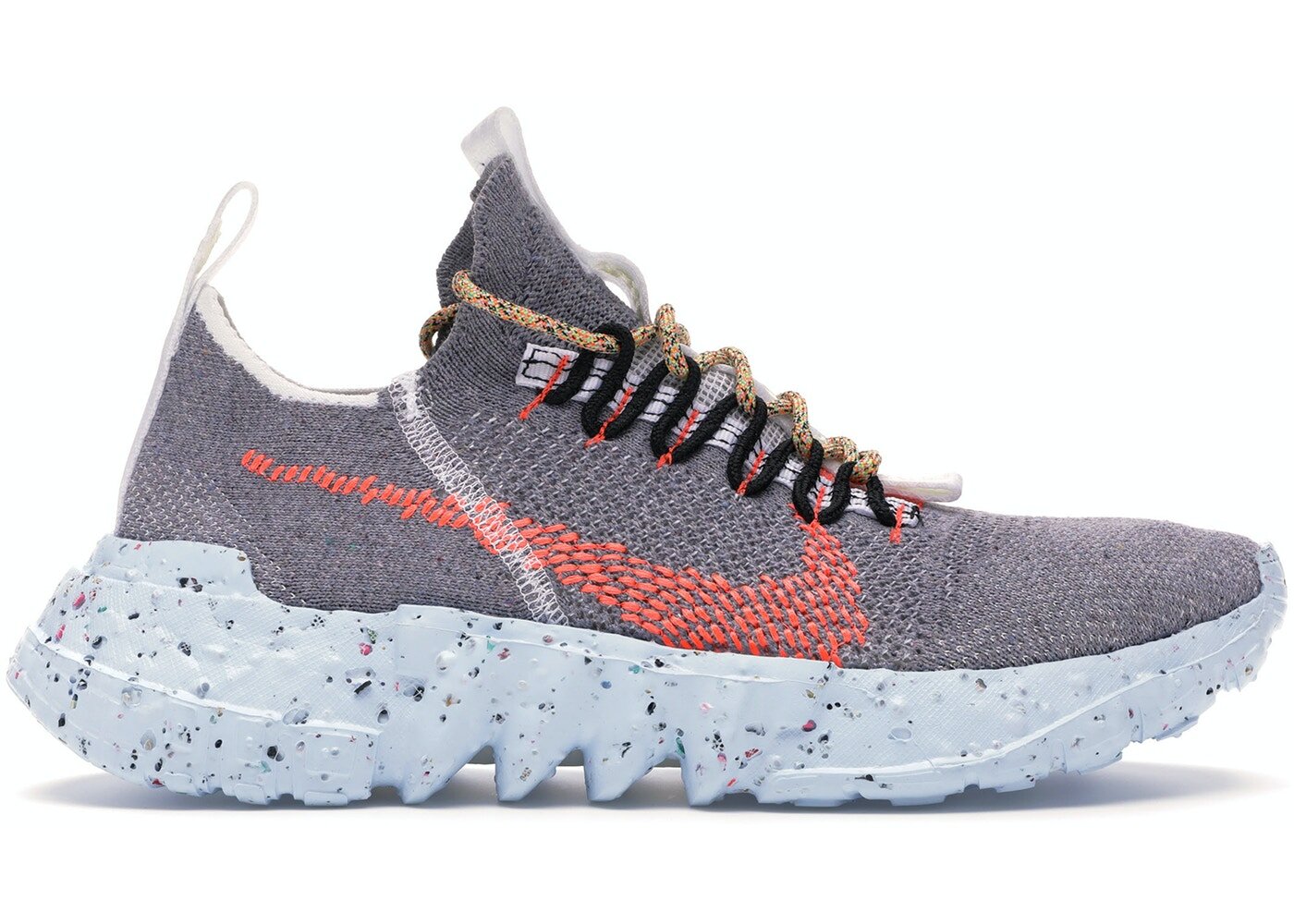
Nike’s sustainability efforts make us want to hitch a ride to another planet.
Nike was out in force last week talking about their new sustainability efforts, such as partnering with UPS to use bio jet fuel for the shipments they send by air. This will reduce the carbon footprint of these air drops by 80%. However, effective planning would reduce that by 100% because they wouldn't need to send by air in the first place. And in the near future they plan on replacing their plastic bags with paper. They had obviously run out of things to say by that point.
However, they are also launching a new running shoe that is made from 100% recycled materials. This is a huge step forward for Nike, however, unlike ON, they won’t be taking responsibility for the product’s end of life.
The US makes apparel sourcing political (but not really).
The US House of Representatives passed a bill to ban the apparel imports from Xinjiang, China under the Uyghur Forced Labour Prevention Act. One fifth of the world’s organic cotton comes from Xinjiang, and while anything to stop the forced labour of ethnic minorities in China is a good thing, this bill does not go far enough in that it only specifies apparel. Fibres, yarns and fabrics that are sent to other parts of China to be made into apparel are not applied. Ultimately there are more holes in this bill than a mesh base layer.
Synthetic microfibres make landfall.
New study released this month shows there are now more microfibres in our soil than there is in the oceans. While in many ways this was expected following on from the University of San Fransisco study about microfibres in waste water and the study from the University of Catania in Italy about micro plastics being found in fruit and veg. With a continued increase of synthetic fabrics being used this does make for concerning reading. But it’s given us a goal to work to and that’s always something!

Finisterre are on track to launch their recycled wetsuit.
Made from recycled tyres and made in the UK, these wetsuits will undoubtedly have a much lower carbon footprint than anything else on the market. And we are pumped! Also watch this space for their Re-Loved platform. As if we couldn’t love these guys enough already!
Changing our ranging process accelerates our impact.

This week I was asked; ”where do we need to come in to the range process in order to make the biggest impact?” And the answer is; From the very beginning.
Historically, that’s a big ask for a brand, wanting to come in at the planning stage rather than being briefed when the range has been signed off to sampling.
Manufacturing is such an essential part of the brand product process that waiting until after your product has been designed to bring in that expertise limits your capacity to make lasting change. It also effects a brand’s ability to move towards a lower waste economy. It is estimated that between 15-25% of fabric is left on the cutting room floor, that’s 15-25% of your fabric cost! As well as 15-25% of emissions!
Understanding the type of product from the offset, being a split short or a 2in1, means that we can help you assess your sustainable apparel goals and provide your designers and developers with the information they need to make products that achieve the desired sell through and reduce the impact we have on the environment.
We can also advise what resources are going to be needed to achieve those goals. Our resources are not infinite and changes will need to happen in order to keep our systems in equilibrium. Rather than looking at it from a demand perspective, we can take a holistic view around what is achievable. I can practically see all merchandisers recoil at the paragraph! But we can drive up demand for full price products, rather than driving a bottom out price point through sales.
Brands will still require profitability, not only to continue, but also to do good. It’s no longer enough to simply give money to other organisations in the hope that they will be able to do the work for you. Such as investing in the ETI but not implementing changes within your own organisations. We can still be profitable, sustainable businesses.
The future is there for all of us, through collaboration and common goals. The future is a bright green!
Where do we begin with sustainability?

How can we start being more sustainable?
In little incremental steps.
It can be difficult to know where to start when you make the decision to make buying practices more ethical. Whether it’s business led or buyer led. But even as individuals it’s a lot easier than you might think to make choices that ensure sustainable apparel. And I’m here to tell you how!
First, build your framework.
I would advise choosing 4 of the UN’s sustainable development goals as your pillars. There are 17 of them, and while some can be interlinked quite easily, some are tricker. The link to the goals is at the bottom of this post.
Choose 4 that resonate most with you and your team. It can be really easy to choose the most popular, or what you think will be the easiest to apply. But this is the surest way to fail. The goals are very broad so it’s easy to apply even in the smallest of ways, and you’re collaborating to bring in greater sustainability which ever ones you choose.
If you’re unsure about how to build framework around the 4 goals, head over to our Instagram this week where we’ll be talking about applying each of the 17 goals both professionally and personally (it’s a bit much to do it here as there is so many of them!).
Once you have your 4 goals, your framework gets built every time you go back and assess whether those decisions you are making sit within one, or all, of those goals. It can also help with sourcing decisions and communicating your ethics with your customers, but we’ll talk more about that next time.
Having a viewpoint on sustainability and making it personable to you will drive up customer engagement so it’s worth doing. If 2020 has taught us anything, it’s that we need to take care of each other and our home. Let’s not forget those lessons.
Link to the UN development goals: https://www.un.org/sustainabledevelopment/sustainable-development-goals/
Click the camera icon below to head over to our Instagram, we’d love you to join us over there!
Why hello there!
Thanks for dropping by to see what The Good Factory is all about, hopefully you’ll have been given a little snapshot that we are a completely new supply chain and we’ve set that up in order to drive forward social and environmental sustainability in sportswear manufacture. We’re always keen to have a chat so don’t be shy to drop us a message, even if it’s just to ask us what our favourite brand currently is, or if we’ve found anything new. We love a chat about all things sustainable and apparel led!
The idea behind us also doing a blog is to keep you up to date with all the little tips and tricks we’ve picked up along the way, as well as some really interesting content from inspiring people we’ve worked with over the years (and there are many!). As creatives we really love visuals and pretty pictures so do follow us on Insta for more regular and condensed information.
We’re here, occupying this space in sustainable manufacturing, because we know it’s not as hard as it’s been commercialised to be. Sustainability doesn’t have to cost the Earth if you’re clever with your targets. Small steps make a giant leap after all. And we also understand that education at consumer levels has also been made complicated, which can hinder engagement. Again, we’re here to help with that! You don’t simply buy a product from us, you enter into a relationship where your sales, your consumers and your product mean as much to us as it does to you. We’re about new ways of working.
So a bit about me as the founder of The Good Factory, I’m Sam and I am a 3rd generation of garment maker. My earliest memory is running around a factory (which was long before any health and safety laws materialised, and I won’t tell you the age I started working in my Uncle’s knitwear factory!), so I have loads of experience working in all types of apparel. Since I started my career in apparel I’ve mainly worked in sportswear and bespoke uniforms, and its this experience that has helped me curate our innovative product lifecycle which increases a product lifespan by 50 years!
If you’ve gotten this far, please do send me an email, I want to hear about you too!